


In an earlier post, we offer you an overview of the vast array of hotel options awaiting those who visited Iowa City during the second half of the 19th century (1850-1890). Read more here. But on November 12, 1913, all of those hotel options were suddenly outclassed.


One of the most intriguing articles in this special November 12, 1913 edition appeared on page 6. It was entitled – Interesting Is Story Of Olden Iowa City Hotels – and while it is not credited to an author, we firmly believe it would have been written by the long-time editor of the State Press – Jacob E. Reizenstein. You can read more about J.E.R. here.


So, here, on this page, let’s take a deeper look at Reizenstein’s article – reviewing some of the amazing Iowa City history found within. Twenty-one hotels – sixty years! Are you ready? Oh, and BTW, along the way, we’ll offer a few insights on some of the hotels & people mentioned in J.E.R.’s story…


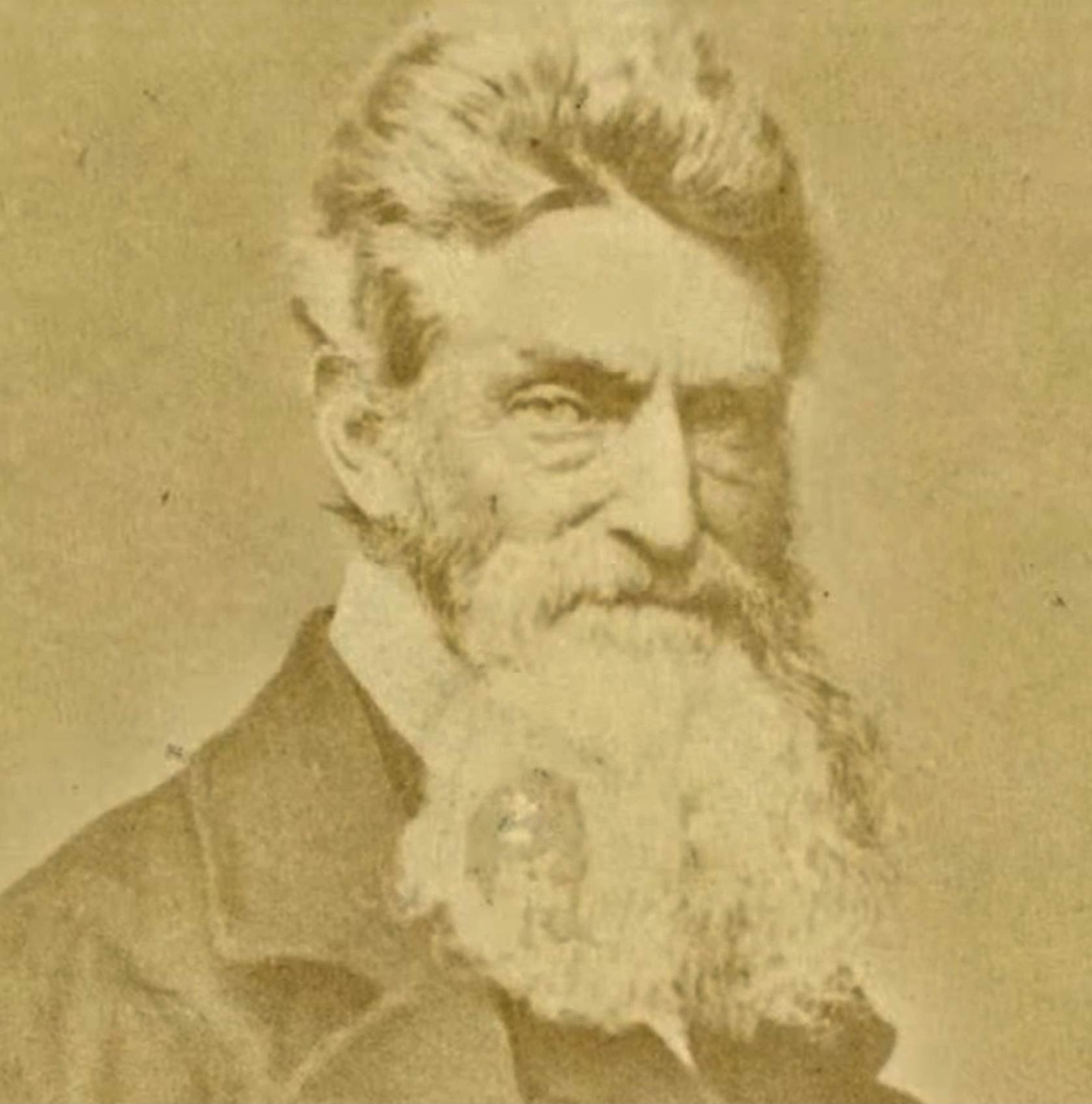
In the mid-1840’s, John Crummey bought H.H. Winchester’s Vermont House – on Washington Street, near the SE corner with Dubuque Street (see map above) – renaming it The Crummey House. As the 1913 article states (above) – one of the hotel’s most infamous guests was the abolitionist John Brown. In February 1859, with the help of his good friends here in Iowa City – Brown, traveling with a number of freed slaves, stayed at The Crummey until it was discovered he was in town. We won’t give away the full story – you can read more details here.


Click here to read about John Crummey’s famous little bell – The Crummey House Rattle…
In the 1880’s, John Crummey sold his hotel to Mrs. K.E. Schaedler, who renamed it The Schaedler House. After her death, the hotel was sold to land investors (1902) and finally came down in 1910 to make room for the Paul-Helen Building – which remains on Washington Street – just west of the Englert Theatre – through today.


Built in the mid-1840’s, The Pennsylvania House was one of Iowa City’s oldest hotels when it was torn down in 1893. As you can read from the 1913 article (above), The Pennsylvania was home to many prominent businessmen who traveled through our community. Built at the corner of College & Capitol Streets, the hotel/boarding house was a red-brick classic – made from bricks from Iowa City’s first brick maker – Sylvanus Johnson (below middle).


The Central House – first owned by a Mrs. MacDonald and then owned by the Dunkel family – was located just one block east of the first Rock Island Railroad (CRI&P) Depot – which was built in the late 1850’s near the end of Johnson Street (see map below). The Central House was a good-sized two-story hotel with 25 rooms, and 17 on the second floor and served as a large central meeting place for many city functions until it burned in August of 1898. Read more here.

That same fall (1898), a new state-of-the-art Rock Island Depot (below left) opened on Wright Street – just 4 blocks to the west of the old one. It’s here – on nearby S. Clinton Street – where the Dunkel family rebuilt their hotel – calling it The Dunkel Hotel. As we will discuss below, the Dunkel’s eventually moved their hotel interests from the railroad to downtown, selling their hotel on S. Clinton to others who eventually renamed it – The New West.


By the early 1900’s, The Dunkel Family had broadened their influence around downtown Iowa City. According to newspaper accounts from August 8, 1904 (above left), the Dunkel’s expanded their hotel business by 1) establishing a new Dunkel Hotel at 1 East College Street (the corner of College & Capitol – across the street from The Pennsylvania Hotel), and 2) buying out John Hunt and his burned out Hunt Hotel – 21 East College Street – and building the new Manhattan Hotel (see below) in its place. Read more here.


Above right – February 11, 1893 – The Daily Citizen reports on “forty pleasure seekers” who dance the night away at the Hunt Hotel, located at 21 East College Street in downtown Iowa City.


As long as we’re in the neighborhood, the 1913 article mentions the Iowa Hotel – across College Street from The Manhattan. Formerly called The Hagen House, Mrs. C.C. Berry built this boarding house on family land immediately following the death of her husband – Johnson County pioneer, Jesse Berry – in the 1859 Iowa City Tornado. Read more here.


One of the finer hotels in Iowa City during the second half of the 19th century was The Pinney House (Hotel) – located just south of The Coldren Opera House on South Clinton Street (see map & picture below). In the 1880’s – George Pinney sold his interest to others, and for a short season, the hotel was called The Palace Hotel. In 1889, businessman H.D. Iverson purchased the old lady – renaming it The Chicago House.


Hastily built in 1841 by Iowa City pioneer Walter Butler, this two-story wood-frame structure was located on Washington Street at the corner of Clinton (see map above) and was used to house the first Iowa Territorial Legislative Sessions (1841-1842). Known as “Butler’s Capitol“, it served the city well as a boarding house and meeting hall after the new capitol building opened in 1842. In the 1850’s, Robert Hutchinson moved it to Jefferson Street, and by the 1880’s, it was purchased by a Mr. Springer who moved it once more – this time to South Dubuque Street – between College and Burlington (see map) – where, by the turn-of-the-century, it became a rather notorious boarding house/hotel – with some calling it Iowa City’s first brothel! Read more here.


Iowa City pioneer John Greulich – who arrived here as a nine-year boy with his family in 1850 – had eighteen years in the Iowa City hotel business. In the early 1890’s, Greulich opened Farmer’s Home (Hotel) on Iowa Avenue – just west of Close Hall (see pic above). Read more about farmers hotels here. In 1900, he transitioned to a new Globe Hotel – which took its name from the original Globe that stood on West Washington Street (see map below) in the 1840’s before changing its name to The City Hotel. Read more here.


The Hanley Hotel was hit hard by fire several times over its decade-long run in Iowa City – with a fire (above left) in August of 1899 being the final straw. Over on College Street – one decade later – the same fate (above right) awaited The Hawley Hotel – which had been in the hotel & stable business since 1899.


In 1882, the Czecho Slovakian community of Iowa City formed a chapter of the Czecho Slovakian Protective Society (C.S.P.S.). In 1900, a Narodni Sin* – community center and meeting place – was built at 524 North Johnson Street and used for all types of activities, including housing as needed. This two-story red brick building – which replaced the earlier Czech National Hall located on the corner of Linn & Bloomington Streets – was listed on the National Register of Historic Places on November 7, 1976, and today, houses the Preucil School of Music.
*FYI – In the Bohemian language – National Hall is known as Narodni Sin. So, on occasion, you will find this name assigned to Iowa City’s National Hall.


As Jacob E. Reizenstein begins to finish up his story, he gives his readers a quick salute to four additional turn-of-the-century Iowa City hotels on his “worthy of mention” list…

The Continental Hotel (The Evers) owned by Henry Evers, and located, like so many others, on East Washington Street several blocks from the SUI campus.

The Van Meter Hotel, owned by O.C. Van Meter and located on Iowa Avenue. Apparently, Van Meter, had earlier owned a boarding house on North Capitol Street as well.

The Vista House on the corner of Burlington & Linn Streets, and The Arlington Hotel – located one block further east on the corner of Burlington & Gilbert Streets.

As Reizenstein’s article comes to a close, J.E.R. saves the biggest & the best for last…


The four-story St. James Hotel – located on the corner of Iowa Avenue & Clinton Street – was built in 1872, and quite honestly, after The Clinton House burned to the ground – that same year – the St. James (below) simply had no competition when it came to being “The Hotel” of downtown Iowa City. Interestingly, the St. James met a fiery end on Good Friday – April 21, 1916. It was this disastrous fire that truly made the new “fireproof” Jefferson Hotel a popular choice for Iowa Citians going into the 1920’s and beyond. Read more here.


The three-story Burkley Imperial (below left) was owned by Frank P. Burkley, and was located at 9 West Washington Street – directly south of Schaeffer Hall on University Square. It too, was a class act – modeling itself after a European boarding house, and being a bit more pricey than the St. James. Sadly, when urban renewal hit Iowa City in the 1970’s, the Burkley was razed in order to build Old Capitol Mall. Read more here.


Finally, there was Svendi Hall (above right) – a beautiful four-story boarding house for women – located on the corner of Dubuque & Jefferson Streets. Originally built in 1852, the building was called The Park Hotel – and was one of Iowa City’s finest – geared toward hosting state politicians when Iowa City was the capital of Iowa. In 1857, when the capital moved to Des Moines, The Park House folded, but thanks to a local businessman, the building was used as St. Agatha’s Seminary for Women. You can read more here.


Well, there you have it. Twenty-one different Iowa City hotels – spanning over a sixty-year period (1840-1900).


All in celebration of the November 12, 1913 opening day for The Jefferson Hotel – which interestingly, is only one of three buildings – Number 14 (Czech National Hall), Number 21 (Svendi Hall) & Number 22 (The Jefferson) – still standing amongst all the ones mentioned in this article. We hope you enjoyed the tour! You can read more here on:
1839-1842 – Iowa City’s First Hotels.
1840’s-1890’s – Iowa City’s Classic Hotels.

August 8, 1904 – The Iowa City Daily Press reports the Dunkel Family will expand their hotel business by establishing the new Dunkel Hotel on the corner of College & Capitol – across the street from The Pennsylvania Hotel.
September 2, 1912 – The Iowa City Daily Press announces the passing of long-time resident and businessman – John Greulich.
November 12, 1913 – In celebration of the grand opening of the Jefferson Hotel – the Iowa City Daily Press prints a special edition. In it, editor J.E. Reizenstein writes up a fascinating look at some of the most memorable hotels in Iowa City history.
December 16, 1913 – The Iowa City Republican reports that a “Noisy Edison” phonograph playing “some lively rag” causes a big ruckus at The Manhattan Hotel.
November 7, 1976 – The Czech-Slovak National Hall – located at 524 N. Johnson Street in Iowa City – is designated on the National Register of Historic Places.
Kudos to the amazing resources below for the many quotes, photographs, etc. used on this page.

New Jefferson Hotel Opens Today, Iowa City Daily Press, November 12, 1913, pp 1-2
Interesting Is Story Of Olden Iowa City Hotels, Iowa City Daily Press, November 12, 1913, p 6
Crummey House ad, Iowa Capitol Reporter, May 12, 1847, p 4
Tearing Away Old Land Mark, Iowa City Citizen, February 28, 1910, p 2
Sale of A Landmark, Iowa State Press, February 19, 1902, p 15
Vail Becomes Head Of Western Union, Iowa City Daily Press, November 25, 1910, p 2
A Landmark’s Goodbye, Iowa City Daily Republican, February 28, 1893, p 3
Big New Hotel Block Comes Now, Iowa City Daily Press, August 8, 1904, p 1
A Pleasant Dance – John Hunt, The Daily Citizen, February 11, 1893, p 4
Hunt Hotel -1894 Hailstorm Pounds Iowa City, Irving Weber, Iowa City Press Citizen, May 3, 1980, p 7
Palace Hotel, Iowa City Daily Republican, December 28, 1880, p 4
Palace Hotel, Iowa City Daily Republican, May 6, 1889, p 3
Manhattan Hotel, Iowa City Daily Press, December 5, 1910, p 18
Noisy Edison Starts Fight, Iowa City Republican, December 16, 1913, p 1
H. Iverson – Chicago House – Died Suddenly Today, Iowa City Daily Citizen, August 31, 1916, p 4
Farmers Home Improved, Iowa State Press, June 14, 1897, p 1
Landlords Change At Globe Hotel, Iowa City Citizen, February 16, 1910, p 3
Pioneer Dies Loved By All – John Gruelich, Iowa City Daily Press, September 2, 1912, p 1
Hanley Hotel Burns, The Iowa Citizen, August 25, 1899, p 5
Czecho Slovakian Association Hall (Iowa City, Iowa), Wikipedia
National Hall, Iowa City Daily Press, February 17, 1876, p 1
Centennial Celebration – National Hall, Iowa City Daily Press, June 26, 1876, p 4
Click here to go on to the next section…
Click here for a complete INDEX of Our Iowa Heritage stories…