


On Tuesday, September 11, 1928 in Cedar Rapids, Iowa – two major events occurred. One was a conclusion of life – The death of 83-year-old Elmer J.C. Bealer – and the other was a new beginning – The dedication of Cedar Rapid’s Veterans Memorial Building (City Hall) on Mays Island.

The following day, on September 12, 1928, The Cedar Rapids Gazette featured both stories prominently on its front page (see below)…


Under normal circumstances, these two news stories wouldn’t be connected, but this time, it’s more than just a coincidence that Col. Bealer’s death and Cedar Rapid’s dedication of their new City Hall are linked together. Which brings us to the story of…


Before we get to Elmer J.C. Bealer‘s story, we need to go back one generation to his parents, John Ellis Bealer, Sr., who was born on December 26, 1826 in Bern, Switzerland; and Mary E. Walker – born on March 21, 1823, in Bern, as well. The young couple was married in 1844, and in 1849, with two children – Elmer Jacob (b-1845, age 4) and Albert (b-1847, age 2) – in tow, and one more on the way, the Bealers boarded a ship for America.


Settling for a short time in Cleveland, John E. Bealer, Sr. found work as a stone mason, and soon moved his family southward to Newton Falls, Ohio, (see map above) where he managed a stone quarry and became a bridge contractor. It was here in eastern Ohio, where the Bealers added three more children to their family as well: John E., Jr. (b-1849), Elizabeth (b-1851), and Mary (b-1853).

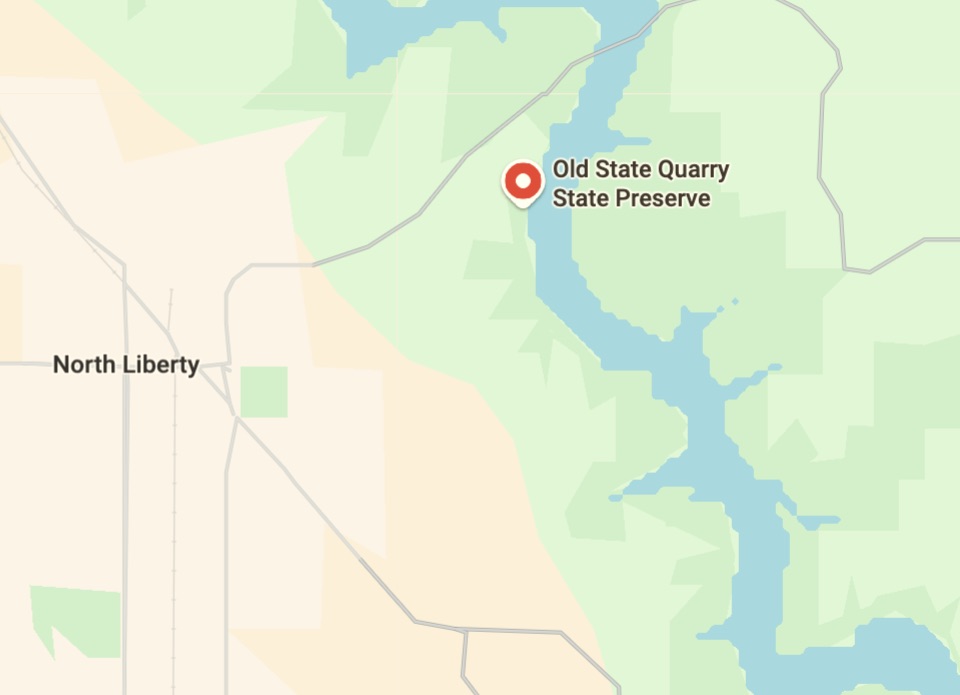
It was this work experience as a quarry manager in Newton Falls that eventually led Poppa Bealer to re-locate to Johnson County, Iowa, where, in 1856, John became the new manager of Capitol Quarry – located 10 miles up the Iowa River from Iowa City – just northeast of North Liberty (see maps above).


After moving the family to Penn Township of Johnson County in the summer of 1856, the Bealers welcomed their sixth child – Henry (b-1856) – into the family, but sadly, only three years later – on February 15, 1859 – Mary E. Walker Bealer – age 35 – suddenly died, leaving John with a growing family of six children.

Now, this is where the Bealer family tree gets a bit confusing. According to records we found on FamilySearch – a free genealogy resource operated by the Church of Jesus Christ of Latter-day Saints – John E. Bealer, Sr. – married Barbara Briggle in 1859, and in April – only two months after Mary Bealer’s death – Briggle gave birth to a son, who died one month later (May 1859). Now, if you think the timing surrounding all this tragedy seems a bit strange, watch this! The following year – on August 15, 1860 – Bealer’s second wife – Barbara Briggle – died, at age 25, after giving birth to yet a second son who died only 15 days after his mother! (see gravestone above)


Finally, to top things off, family records also indicate that John Bealer, Sr. wasn’t done with marriage, even after the sudden loss of two wives in less than two years…


On February 24, 1861 (see certificate above), only five months after his second wife’s sudden death, Bealer married once again! This time it was to Barbara’s older sister – Catharine Briggle, who also went on to have a baby daughter die in December 1862 (see tombstone above), before going on to have four more children with John E. Bealer before his death in 1878!

Whew. Did you follow all that? Three years. Three wives. Two of which died, combined with three lost pregnancies – all credited to Bealer. Yowsers!

You see, in 1856, when the Bealers came to Johnson County, hundreds of Mormons were descending upon our fair city because we were the jumping off point – the furthest western stop – of the American railroad. So, as many Mormons traveled here to begin their long westward trek to Salt Lake City via handcarts, there were some, like possibly John E. Bealer, Sr., who decided to stay here in Iowa once they settled into a regular job. Now, we have no records that proves this theory, but as of the time of this writing, we believe our “Mormon polygamy” idea to be the most obvious cause for Bealer’s three back-to-back-to-back marriages & pregnancies between February 1859 and December 1862.


So, despite all of the personal loss and tragedy within the family, Poppa John E. Bealer, Sr. was making a big name for himself managing the largest stone quarry in eastern Iowa, while also building roads and constructing bridges throughout Johnson County! According to family records, his oldest son – Elmer Jacob C. Bealer – was actively working alongside his father from the time he was a young man. As we mentioned earlier, Elmer was born in Bern, Switzerland on May 20, 1845, and was only four years old when the family came to America, and was age eleven when his father moved the family to Johnson County in 1856.


On June 14, 1862, Elmer J.C. Bealer – age seventeen – enlisted in the Union Army – Company A, Twenty-Second Iowa Infantry. He fought at the siege of Vicksburg, in the campaigns along the Red River and in the Shenandoah Valley, and in the battle of Cedar Creek, where a seeming defeat was turned into a decisive victory for the Union troops. It was here, Bealer was wounded on October 19, 1864, and as a U.S. Corporal, was mustered out at Savannah, Georgia, on July 25, 1865.


Upon his return to Iowa City on August 4, 1865, Elmer J.C. Bealer, age 20, got right down to business, working, once again, alongside his father, John E. Bealer, Sr., to contract with both the City of Iowa City and the State University of Iowa to build buildings – such as SUI’s North Hall (see above), located just north of Old Capitol, streets and roads throughout the city, and much-needed bridges all across Johnson County. Below are more details from Bealer family records…


On October 26, 1867, Elmer took time out of his busy work schedule to marry the recently-widowed Mary C. (Molly) Stephens Erb. The couple went on to have three children of their own: Orpha (b-1870), Jessie (b-1877), Millard (b-1884), plus one child – Lovell L. Erb, from Mary’s earlier marriage.

Meanwhile, in 1870, Elmer’s father – John E. Bealer, Sr. purchased farmland in Madison Township of Johnson County (see 1870 census below) and moved his extended family there…


In 1877, Elmer’s younger brother – John E. Bealer, Jr., along with their father – John E. Bealer, Sr., sold their shares in the Bealer family farm, and any interest they still had with Elmer’s successful construction business, and moved westward to Beatrice, located in Gage County, Nebraska. There, the plan was to build a contracting business similar to the one they had built in Johnson County. Plans were proceeding well, when on August 1, 1878, disaster hit. 51-year-old John E. Bealer, Sr. died suddenly when he was struck by rolling timber that was being cleared by his construction team. The Iowa City newspapers reported the sad news…


It’s our belief that when the article (right) states that John E. Bealer, Sr. was “interred in the family grave yard”, that means that he was buried alongside his first and second wives, Mary E. Walker Bealer and Barbara Briggle Bealer, at Ridgewood Cemetery in North Liberty. As of this writing, however, there are no “official” records proving our case.


With his father gone, and his two younger brothers moving on to other interests, Elmer J.C. Bealer, in 1878, moved his family to Cedar Rapids and began pursuing the same line of work he had so successfully accomplished here in Johnson County. In 1884, he opened the Cedar Valley Quarry on the Cedar River and developed it into what was said to be the greatest plant in that industry in Iowa. An important shipping point for the BCR&N Railroad, Bealer was interested in many business enterprises in and about Cedar Rapids, contributing his talent, energy and means to the development of the city. In 1898, Bealer was elected a director of the Independent School District of Cedar Rapids, and greatly assisted in his six years’ membership in building and remodeling the school buildings of the district. He was also the only non-Catholic member of the building committee of Mercy Hospital at the time of its construction (1900).


In 1901, Elmer J.C. Bealer was elected to the Iowa Legislature, where he served for three sessions (1902, 1904, 1906) and helped to pass legislation in the interest of veterans, including the appropriation bill for the Vicksburg Civil War monument (see below)…

Col. Bealer was a member of Grand Army Post No. 235, at Cedar Rapids, and was elected Commander of the Iowa Department of the Grand Army of the Republic, 1918-1919.


Elmer J.C. Bealer‘s last public activity was as an active member of the commission for the erection of the magnificent Veterans Memorial Building on Mays Island in Cedar Rapids, but, as we reported at the top of this article, he was called by death on September 11, 1928 – the evening of the final dedication. The Cedar Rapids Gazette reported on how badly Bealer wanted to be present for the building’s dedication…


Both Corp. Elmer J.C. Bealer (1845-1928) and his wife, Mary C. (Molly) Stephens Bealer (1842-1922) are buried in Oak Hill Cemetery in Cedar Rapids. Godspeed to you both and to the entire Bealer family of Iowa City!


September 11, 1928 – Iowa City’s famed bridge builder and contractor – Elmer J.C. Bealer – passes away on the same day his last Cedar Rapids project – Veterans Memorial Building – is dedicated.
September 12, 1928 – The Cedar Rapids Gazette publishes two corresponding stories: Contractor Elmer J.C. Bealer passes away on the same day his last Cedar Rapids project – Veterans Memorial Building – is dedicated.
Kudos to the amazing resources below for the many quotes, photographs, etc. used on this page.
Old State Quarry State Preserve (Capitol Quarry), North Liberty, Wikipedia
John Ellis Bealer Sr., Family Search
Mary W. Bealer, Ridgewood Cemetery, Johnson County, Iowa
Mary Walker Bealer, Find-A-Grave
1860 US Census- Bealer Family, Family Search
Barbara Briggle Bealer, Wikipedia
1861 Marriage Certificate – Bealer/Briggle, Family Search
1870 US Census- Bealer Family, Family Search
Tribute of Respect to John E. Bealer, Sr., Iowa City Daily Republican, August 20, 1878, p 4
Madison Twp – Feb 10, 1879, Iowa City Daily Republican, February 11, 1879, p 4
John Ellis Bealer, Sr., Find-A-Grave
Elmer J.C. Bealer & Family Time Line, Family Search
Elmer J.C. Bealer bio, Annals of Iowa, University of Iowa #8061
Elmer J.C. Bealer – Representative bio, Iowa Legislature
Mrs. Bealer Is Killed By St. Car In 3rd Ave, Cedar Rapids Gazette, June 21, 1922, p 1
Mary C “Molly” Stephens Erb Bealer, Find-A-Grave
Col. E.J.C. Bealer Is Dead, Cedar Rapids Evening Gazette, September 12, 1928, p 1, 7
Elmer Jacob C. Bealer, Find-A-Grave
Veteran’s Memorial Building (City Hall), Cedar Rapids, Iowa, Wikipedia
Click here to go on to the next section…
Click here for a complete INDEX of Our Iowa Heritage stories…