

As a 1973 graduate of the University of Iowa School of Music – a music education major with a B.M. degree (see below) – I’ve always had a vested interest in the UI School of Music.


On other pages, I offer the history of the University of Iowa Hawkeye Marching Band, our HMB director Dr. Tom “Mom” Davis, and I even offer an overview of many of the UI Gathering Places during my four years at Iowa (1969-1972). So here, I’d like to give a tip of the old hat to the history of…


As we discuss elsewhere, the State University of Iowa (SUI) was established in 1847 as Iowa’s first public institution of higher education. Many don’t realize that Iowa was the first university in the United States to accept creative work in theatre, writing, music, and art as theses for advanced degrees!

While the SUI School of Music didn’t actually start until 1906, music certainly was a part of the campus experience in Iowa City from the very beginning…


Interestingly, the very first mention of a band at SUI was in the spring of 1865 when a student petitioner named Frank Springer, a member of the Zetagathian literary society, pushed for the establishment of a University band. His “forceful agitation” was evident in a letter written to the Board of Trustees, in which he pressed for the purchase of instruments and establishment of a brass band at the University. Sadly, there is no record of anything ever being done in response to Mr. Springer’s request. But that all changed by 1875…


Between 1875 and 1900, several musical groups began appearing on and around campus, with the first official military band – The University Battalion Band – formed by General Orders Number One, Headquarters University Battalion, Iowa City, Iowa on September 14, 1881.

The SUI Military Band performed at all of the major university functions, including regular appearances at Hawkeye football games held at Iowa Field (see below) – located just west of Old Capitol.


The SUI School of Music “unofficially” had its beginning when a very-talented 26-year-old vocalist & music director – Effie Mae Proffitt – came to Iowa City from Upper Iowa University in Fayette, Iowa…


While called here to Iowa City by the Methodist Church to lead their choirs (see above middle), Miss Proffitt, as she was known, also opened a music studio in Unity Hall (above right). Over the next three years (1906-1909), she successfully ran Effie Mae Proffitt’s School of Music, Affiliated – working alongside the faculty of SUI, and beginning on July 12, 1906, with classes starting in the fall of 1906…


One of the best moves that Effie Mae Proffitt made (1906) as the first-year Director was to encourage the SUI Military Department to hire Henry G. Cox as the Cadet Military Band’s first director/bandmaster. Proffit also invited Cox to be the School of Music’s first instructor of violin and orchestral instruments, and over the next two years (1906-1908), Cox served in these roles, finding great success with his work – doubling the size of the SUI band (see pic below) to fifty-seven members in his first year! Read more here.

While Proffitt’s School of Music did not have any departmental status, all this success was being carefully monitored by SUI faculty, and by 1908, in President George MacLean‘s Annual Report to the State Board of Regents, the following paragraph appeared…


The following year (1909), the University gave departmental status to the SUI School of Music, hiring Professor Carl R. Fisher – from London, England – as it’s first director. Apparently, that arrangement only worked out for about one year, because by the fall of 1910, Professor Gustav Schoettle had replaced Fisher as Director, with Miss Proffitt staying on as the Associate Director…


When the University began offering degree work in music (1909), the program continued to be headquartered in Unity Hall (below left) located on the northeast corner of N. Clinton Street & Iowa Avenue, with additional studio and practice room space being rented in two nearby buildings: (below top right) School of Music Annex 1 at 24 N. Clinton Street; and (below bottom right) School of Music Annex 2 at 28 N. Clinton Street.
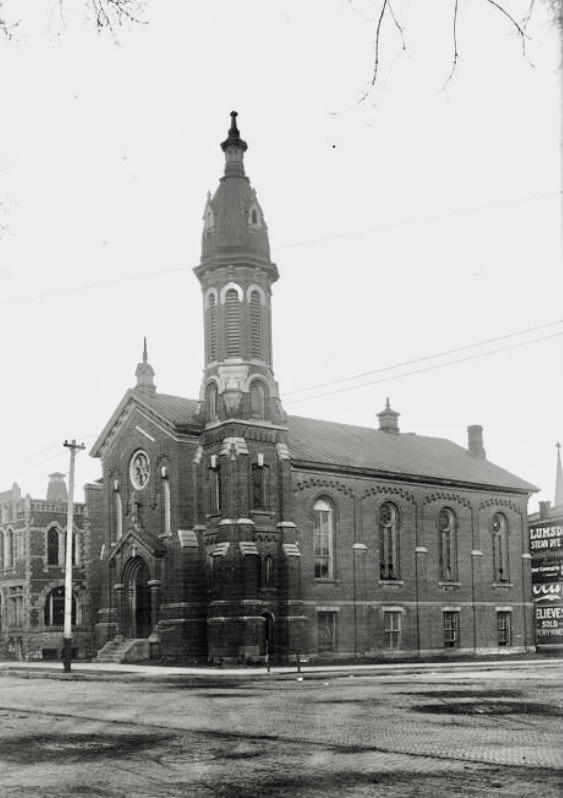


Read more about Unity Hall – SUI’s Gathering Place on N. Clinton Street.

As for Effie Mae Proffitt – who was sadly overlooked when it came to choosing a school director – she headed off to Des Moines in 1915 on a temporary leave (see article below left). But, as you can see from the article in the September 3, 1916 edition of The Des Moines Register (below middle), Effie Mae married Frank G. Callander, a Des Moines native who graduated from the SUI College of Law (1914), and her family records indicate that she lived in Des Moines over the next 47 years!


In the fall of 1916 (see 2 articles below left), we find that Effie opened up a Music Studio in Des Moines, specializing in the training of singers to entertain in Chautauqua and Lyceum performances. And, in the September 12, 1929 edition of The Des Moines Tribune-Capital (below right), we see that the 49-year-old Effie Callander – who trained and performed across Europe and America – is now joining the faculty at Drake University, doing what she first did in Iowa City (1906-1915) – working with college-age vocalists.


Effie’s husband – Frank G. Callander – a WWI veteran – passed away in 1958, and Miss Effie Mae Proffitt Calander – founder of the UI School of Music in 1906 – lived another five years until her death in 1963 at age 83! Both are buried at Woodland Cemetery in Des Moines. Godspeed!


Back in Iowa City, this “musical” arrangement between the School of Music and the University continued until 1919, with the school (see signage on Unity Hall below) being viewed as an affiliated conservatory of music under the supervision of the Dean of Liberal Arts, with students paying fees for their instruction rather than tuition.
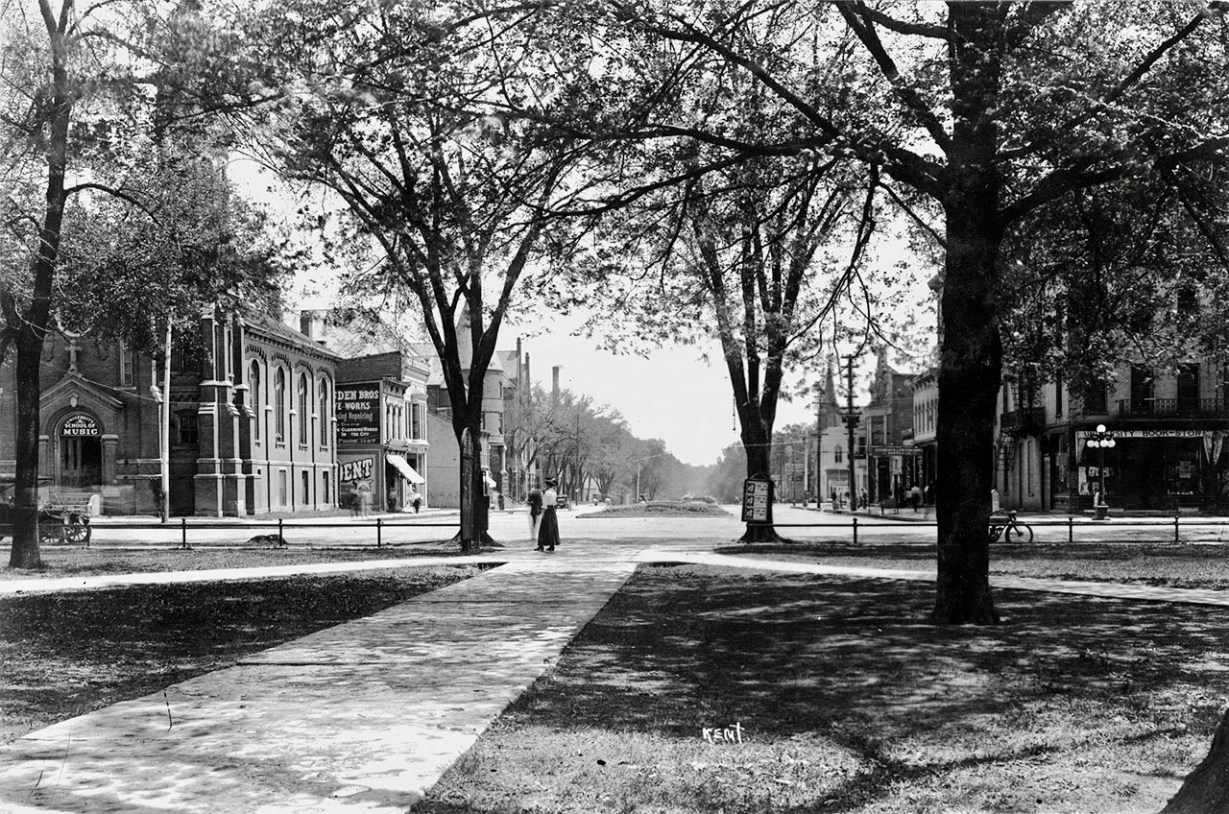
This confusion was finally cleared up in 1919, with the hiring of a new director: Philip Greeley Clapp…


When Philip Greeley (P.G.) Clapp arrived to head up the School of Music in 1919, he was charged with reorganizing the school into a regular department and administering the staff of eight teachers. By 1921, music had become a full-fledged department in the College of Liberal Arts, all music courses had gained full academic recognition, large performing ensembles had been developed, and graduate study had been established as central to the mission of the School of Music. Clapp also developed a music contest and a summer music camp to encourage the development of music in the state of Iowa.


As large ensembles were established, other university buildings were used for rehearsals, while additional rooms in various nearby homes were rented as practice rooms. For a short season – 1928-1932 – the Old Dental Building (see pics above) – located on the Pentacrest – was used to house School of Music classes and events.


As the university grew, so, of course, did the SUI School of Music. With facilities on Clinton Street being stretched far too thin for far too long, a new Rehearsal Hall was built on the west side of Gilbert Street (see pics below) – adjacent to the SUI Isolation Hospital Building (see pics above) located on the southeast corner of N. Gilbert and E. Jefferson Streets (today’s Stuitt Hall). As we discuss elsewhere, the SUI Hospital and School of Medicine had occupied numerous buildings up and down Iowa Avenue until moving to the west side of the Iowa River in the 1920’s, so the vacant Isolation Hospital (1915) – when refurbished – became the new home for the School of Music beginning in 1932.


Moving into these two buildings on Gilbert Street, this ‘eastside of the campus’ location – though still woefully small (see pics below) – became the home of the SUI School of Music over the next forty years (1932-1972).


Because this complex was never large enough, various other buildings and houses were still appropriated by the Music Department through the years – the largest being the former Nurses Dormitory – called Eastlawn – which was located across Iowa Avenue from the SUI Rehearsal Hall (see pics below). When your humble author was a music major at Iowa (1969-1973), these were the buildings I called home as I studied to become a band director. Read more of my story here.


So, between 1932 and 1972, any larger-sized concerts and/or major ensemble events were all held in the Main Ballroom of the Iowa Memorial Union.


In 1953, after thirty-four years of service, Professor Clapp retired as Director of the School of Music, and was succeeded – in 1954 – by Himie Voxman. Serving in this capacity until 1980, Voxman’s contributions to music education, pedagogy, and wind instrument repertoire were nationally recognized throughout his tenure as director, and continue to the present time.


In 1971, Professor Voxman oversaw the opening of a new Music Building on the west-side of the Iowa River, adjacent to the new Hancher Auditorium. With its 700-seat recital hall named in honor of Dr. Clapp, this state-of-the-art facility was the first university building, after 60+ years of service, that was designed purposely for the School of Music. I was a junior at Iowa when this building opened for classes during the spring semester of the 1971/72 school year. After three years of being confined in the old, run-down settings of the refurbished hospital building, Eastlawn, and the cramped-up Rehearsal Hall, these new digs were life-giving indeed!


Click here to read about the opening night of The Music Man at Hancher Auditorium (1972)…


At Professor Voxman’s retirement in 1980, Marilyn Somville was appointed to head up the School of Music (1980-1990). John Hill served as interim director (1990-1991), followed by David Nelson (1991 to 2000). Kristin Thelander took over as director (2000-2008), David Nelson returned for one year (2008-2009), and was succeeded by David Gier (2009-2018). Benjamin Coelho served as the interim director for one academic year (2018-2019) and the current director (2019-2025) is Tammie Walker.


In June of 2008, the Voxman Music Building and the adjoining Hancher Auditorium (which both opened in 1971/1972) were totally destroyed by massive flooding.


But, out of that 2008 disaster, came this new beginnings…


In 2016, the university, with critical support from the federal government, the State of Iowa, and many generous donors, completed the School of Music’s new home, the Voxman Music Building, located at the corner of South Clinton and Burlington Streets in downtown Iowa City!

Featuring dynamic learning spaces and breathtaking stages for the School of Music’s 350-plus yearly public performances and presentations, the Voxman Music Building is optimized to support creative and scholarly work, with acoustically ideal performance and practice spaces, as well as the Rita Benton Music Library.


The 190,000 square-foot space includes a 700-seat concert hall, 200-seat recital hall, organ performance hall, opera and chamber music rehearsal spaces, faculty studios, classrooms, practice rooms, electronic music and recording studios, and a student commons. The building features the latest instructional and recording technology.


So, there you have it. From Professor F.J. Whipple and his $1 voice lessons (1860) to Effie Mae Proffitt and her music studio in Unity Hall (1906), from a water-logged Clapp Hall (2008) to today’s magnificent Voxman Music Building, the University of Iowa’s School of Music continues the fine tradition of making beautiful music here in Iowa City. We hope you’ve enjoyed this journey!


PW – June 15, 2025
PW – June 22, 2025
PW – September 7, 2025

December 7, 1906 – The Daily Iowan announces the SUI Military Cadet Band’s first concert held in the new Armory on the SUI Campus.
September 3, 1916 – The Des Moines Register announces the marriage of Effie Mae Proffitt – founder of Proffitt’s School of Music in Iowa City.
Kudos to the amazing resources below for the many quotes, photographs, etc. used on this page.
Various School of Music photographs, University of Iowa Digital Library
The Concert Monday Evening, Weekly Iowa State Reporter, March 14, 1860, p 3
Prof. Whipple, Democratic State Press, September 19, 1860, p 3
Will Direct Church Music, The Iowa Citizen, February 2, 1906, p 12
Music School Established, Davenport Democrat & Leader, July 12, 1906, p 7
School of Music Adjunct, The Evening NonPareil (Council Bluffs), July 13, 1906, p 5
Concert and Hop at Armory To-Night, Daily Iowan, December 6, 1906, p 1
School of Music, SUI 1908 Report of the President, p 35
Miss Proffitt Will Stay Here, The Iowa City Daily Press, May 12, 1909, p 16
Prof. Schoettle Heard Next Week, Iowa City Citizen, October 29, 1910, p 4
Iowa City Artist To Capital City, Iowa City Daily Press, October 7, 1915, p 1
Miss Effie Mae Proffitt Weds, Des Moines Register, September 3, 1916, p 23
Voice and Lyceum Work, Des Moines Register, October 6, 1916, p 10
Effie Callander To Join Drake Faculty, Des Moines Tribune-Capital, September 12, 1929, p 25
Callendar Dead At 69, Des Moines Register, April 3, 1956, p 6
Mrs. Callander Is Dead, December 24, 1963, Des Moines Tribune, p 3
Effie Mae P. Callander, Find-A-Grave
Philip Greeley Clapp, Wikipedia
Stuitt Hall, University of Iowa
UI Fortifies Buildings To The South, Iowa City Press-Citizen, June 12, 2008, p 5
Iowa City Flooding, Iowa City Press-Citizen, June 17, 2008, p 5
Voxman: The man behind the building name, Cristóbal McKinney, University of Iowa: Iowa Now, October 17, 2016
University of Iowa School of Music, University of Iowa website
Click here to go on to the next section…
Click here for a complete INDEX of Our Iowa Heritage stories…