
Did you know that the hobby of collecting matchbook covers is known as phillumeny?
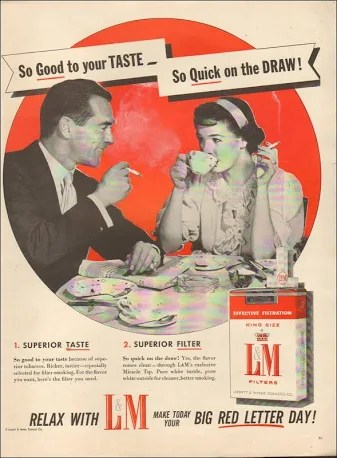


The first commercially produced matchbooks were introduced in the United States in the early 1900s, after the Mendelson Opera Company used blank matchbook covers to handwrite promotional information on the imminent arrival of “America’s Youngest Operatic Comedian,” Thomas Lowden, in 1889. In 1894, inspired by the Opera’s innovation, Diamond Match salesman Henry Traute began approaching manufacturers to promote their products on his company’s matches and convincing them to give away matchbooks to their customers for free. Among the first companies to order advertising matchbooks were Pabst beer (from which Traute got his first order for 10 million matchbooks), American Tobacco Company and Wrigley’s Chewing Gum. Soon enough everyone followed suit, and matchbooks quickly became a cool way for businesses to advertise themselves to a wide audience due to their easy distribution, low cost, and portable nature.


By the 1940s, it was estimated that more than one million Americans had become phillumenists—aka lovers of light, from Greek Phil- [Loving] + Latin Lumen- [Light]—and included people who had a shoe box or fish bowl filled with packs of matches from local stores and restaurants, to more serious collectors with matchbook covers organized in hundreds of different topics.
Thanks to the rise of graphic design as an art form in the 1950s and 1960s, matchbooks became a commercial advertising medium for bars, restaurants, and other businesses. Many establishments would print their names, logos, and addresses on matchbooks and leave them on tables for customers to take home as free souvenirs. This practice continued for several decades, with matchbooks remaining a common sight in bars and restaurants until the advent of smoking bans in the early 2000s and the rise of disposable lighters. One last change was made to the matchbook design because in 1973 a federal regulation mandated that the strikers be moved from the front of the matchbook to the back.
Today, matchbooks have begun to regain some of their traction as a retro advertising item, particularly in high-end restaurants, although they are much less common than they once were. With the rise of digital advertising and the decline of smoking, matchbooks have unfortunately lost some of their status, but they nevertheless remain an enduring symbol of American culture.
Thanks to one of our good on-line buddies – Mike Avitt – phillumenist extraordinaire from Mt. Ayr, Iowa – we have assembled a good-sized collection of Iowa City area matchbooks, generously donated to Our Iowa Heritage. Here for your perusal are pics of these beauties – presented somewhat by category (with an occasional error or two). Enjoy!


Hats off to the Armed Services of the good ‘ole USA. Here’s a cover from the Iowa City Moose Lodge #1096 and a rare cover from the WWI days of the 1940’s – when the U.S. Navy had a Pre-Flight School here in Iowa City. Read more here.


Here, we have: (Top) Swisher Trust & Savings Bank, First National Bank (3), University of Iowa Credit Union, Iowa State Bank & Trust (Christmas message); (Bottom) Iowa State Bank & Trust (3), Hawkeye State Bank, and First Federal Savings & Loan.


Here, we have: (Top) Jefferson Street Cafe, Micky’s Irish Pub, The Carousel, Fitzgerald’s Brewing, Super Spirits; (Bottom) SpeakEasy, The Sports Column, The Field House, and Charlie’s.
(Below Top) The Airliner, Fitzgerald’s, Third Coast, DJ’s; (Below Bottom) The Majestic Message, The Vine, The Misque, and Mondo’s (courtesy of Mike Avitt)…


Here, we have: DeliMart, Kum&Go (2), Casey’s, Suburban Amoco, and QuikTrip.


Here, we have: (Top) Carousel Inn, Iowa Lodge, Shady Park Motel, Ambassador Inn, Capri Motor Lodge, Hawkeye Lodge (2); (Bottom) Cantebury Inn, Heartland Inn, Sunset Motel, Jefferson Hotel (2), Iowa House, Carousel Inn, and Ironmen Inn.


Here, we have: (Top) D.J.’s Family Restaurant, Smith’s Cafe, Racine’s Cigar Store, Princess Cafe (2), Doug’s Coffee Shop/D&L Grill; (Bottom) Academy Luncheonette.
(Below) Eight different versions of The Princess Cafe (courtesy of Mike Avitt)…


Here, we have: (Top) M.T. Cohen, Lubin’s Drug Company, Reliable Loan & Jewelry Co., Brown’s Unique Cleaners, Kelley Cleaners; (Bottom) L&M Mighty Shop (2), Harris Discount, H.L. Bailey Agency, Travel Services Inc., and Third Coast.


Here, we have: (Top) Carol J’s Bar & Grill, Gasby’s, University Athletic Club, Wig & Pen Pub, Chill & Grill, Babb’s Cafe & Tavern; (Bottom) Doug’s Coffee Shop, Curt Yocom, Vanessa’s, Pizzeria Chicago, and Season’s Best.


Here, we have: (Top) Ground Round, Brown Bottle, Mondo’s, The Lark, Gringo’s (2), Chauncey’s; (Bottom) Maxie’s (2), Givanni’s, Bishops, Cobb’s, and Iowa River Power Company.


Here, we have: (Top) Highlander Inn (2), Atlas World Grill, Olive Garden, Riverside Casino; (Bottom) Ming Garden, China Garden, Perkin’s Pancake House, Bushnell’s Turtle, Outback Steakhouse, and Village Inn.


Here, we have: (Top) Dairy Queen, Wendy’s, Carlos O’Kelly’s (2), Pizza Hut; (Bottom) Diamond Dave’s (2), Kmart, and Applebee’s.
So, there you have it – ranging approximately from the 1940’s through the 1980’s, these matchbook covers give us a nice, little tour of Iowa City and the surrounding area. How many of these fine establishments do you remember visiting?
Kudos to the amazing resources below for the many quotes, photographs, etc. used on this page.
Special thanks to Mike Avitt for his generous donation of these matchbook covers! You can visit mike on Facebook – Michael E. Avitt, Mt. Ayr, Iowa
The History of Matchbooks, OhWhatAMatch.com
Click here to go on to the next section…
Click here for a complete INDEX of Our Iowa Heritage stories…